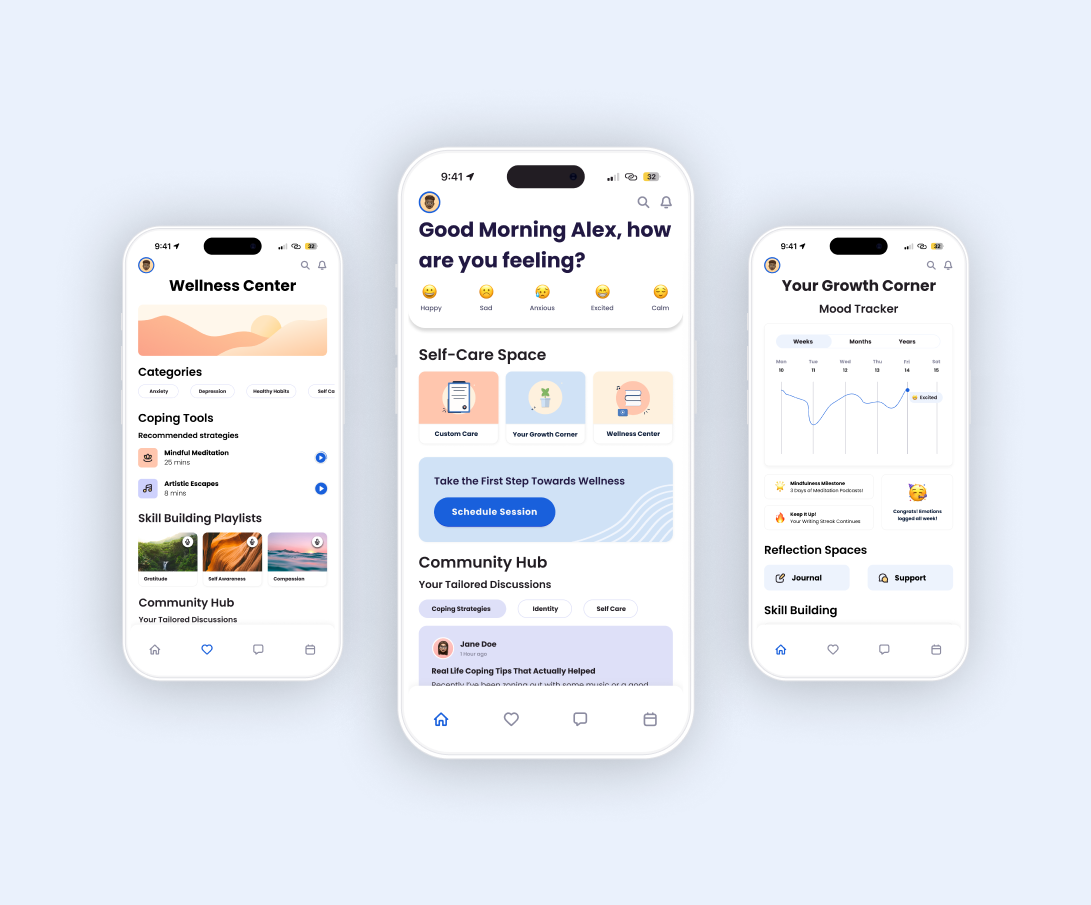
Purpose: A strategic editorial report developed for interos, an AI-driven supply chain risk intelligence company, highlighting the most critical global risks through 2026 to support informed, proactive decision-making.
Outcome: Launched as gated thought-leadership content, the report contributed to a 33% increase in qualified lead generation and became a core sales and marketing asset for executive engagement.

Global supply chains are no longer just operational — they’re geopolitical, technological, and deeply interconnected.
The challenge wasn’t a lack of data. It was information overload.
Leaders needed a way to:
• See patterns across seemingly unrelated risks
• Understand second- and third-order impacts
• Quickly grasp what actually mattered — and why
The problem to solve:
How do you turn dense, multi-source risk intelligence into a narrative people can actually read, understand, and use?
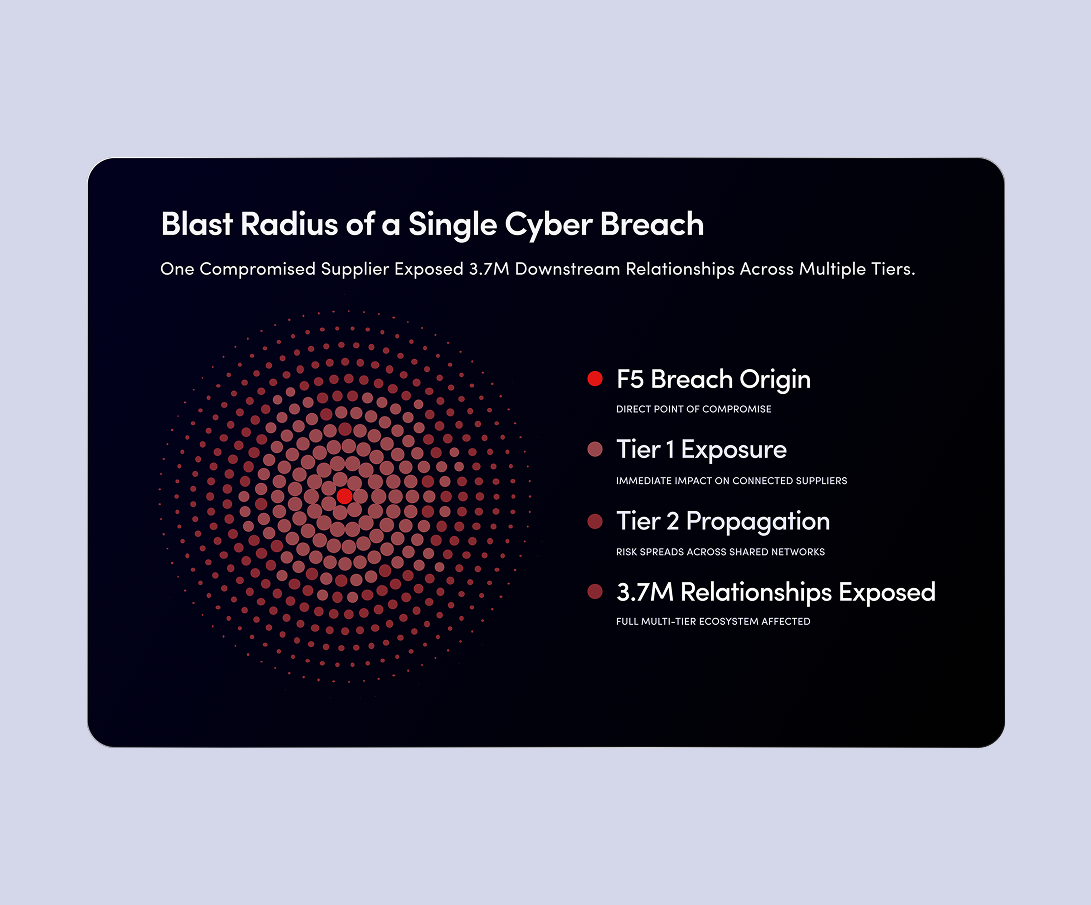
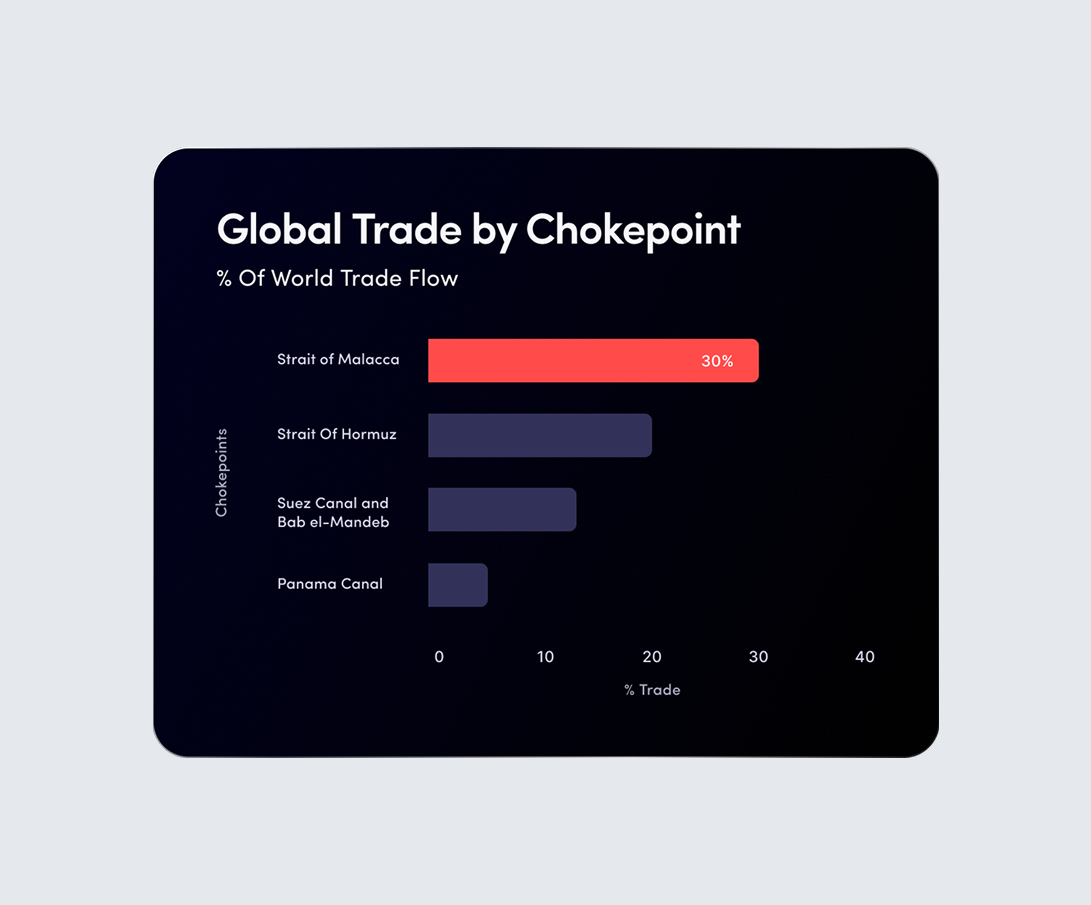
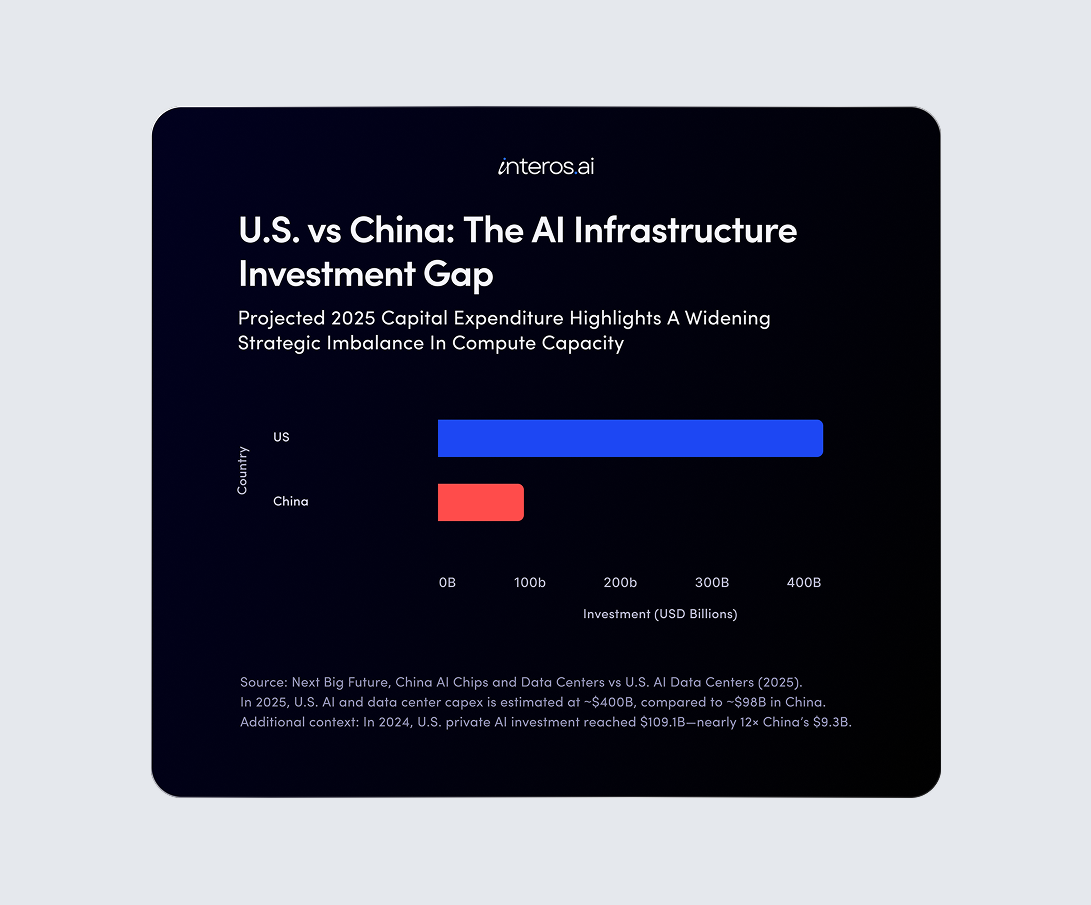

The strategy was grounded in one core principle:clarity over complexity — without losing credibility.
The report was structured like a story, not a spreadsheet. Each section builds momentum — from geopolitical risk, to AI infrastructure, to rare earth dependencies — helping readers connect dots rather than consume isolated insights.
Typography, spacing, and contrast were used intentionally to guide attention. Key insights surface immediately, while deeper context remains available without overwhelming the reader.
Charts and graphics were designed to teach, not impress — prioritizing legibility, comparison, and takeaway clarity over visual noise.
A flexible layout system allowed each section to feel distinct while maintaining cohesion — enabling future reports, updates, and expansions without starting from scratch.
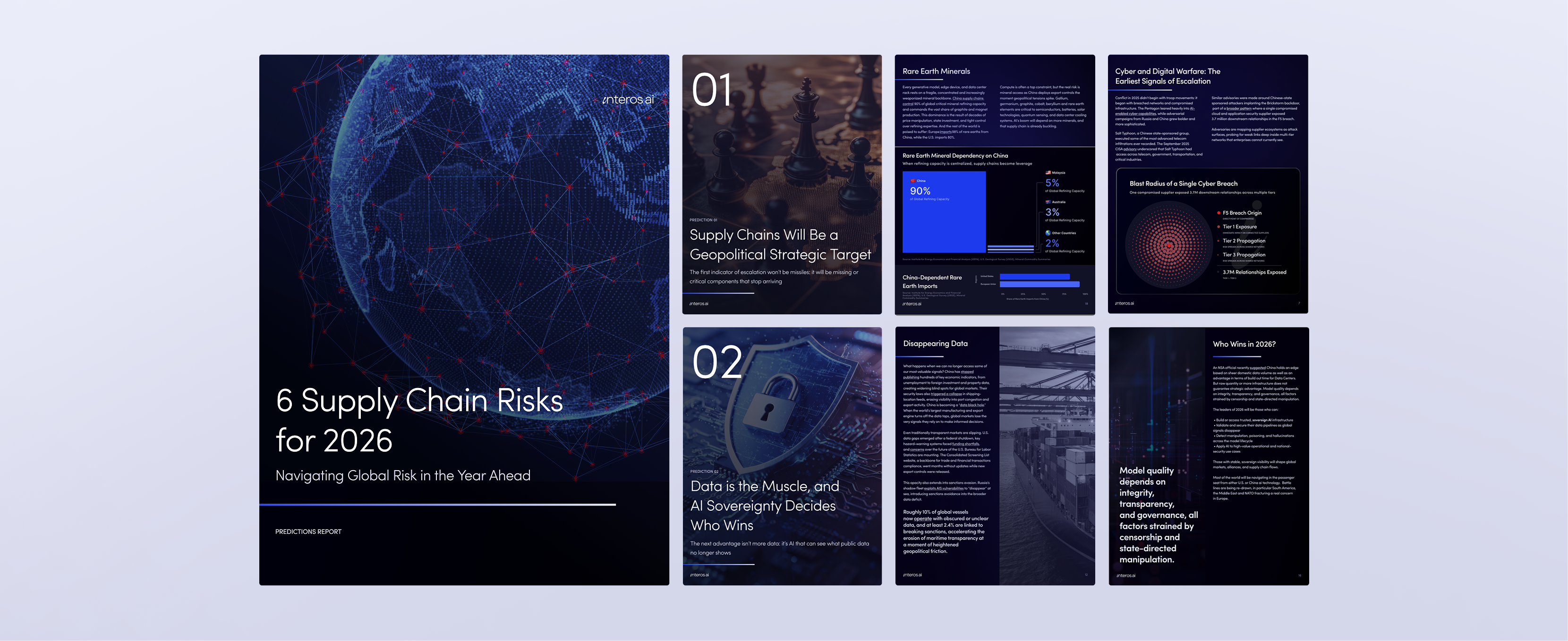
The report elevated Interos’ position as a trusted authority in global risk intelligence, helping executives quickly understand complex, interconnected threats. It supported stronger internal alignment and established a scalable framework for future thought-leadership content. As gated content, the report drove a 33% increase in qualified leads and became a key sales and marketing asset—proving that strong design can reduce cognitive load and directly support business growth.